
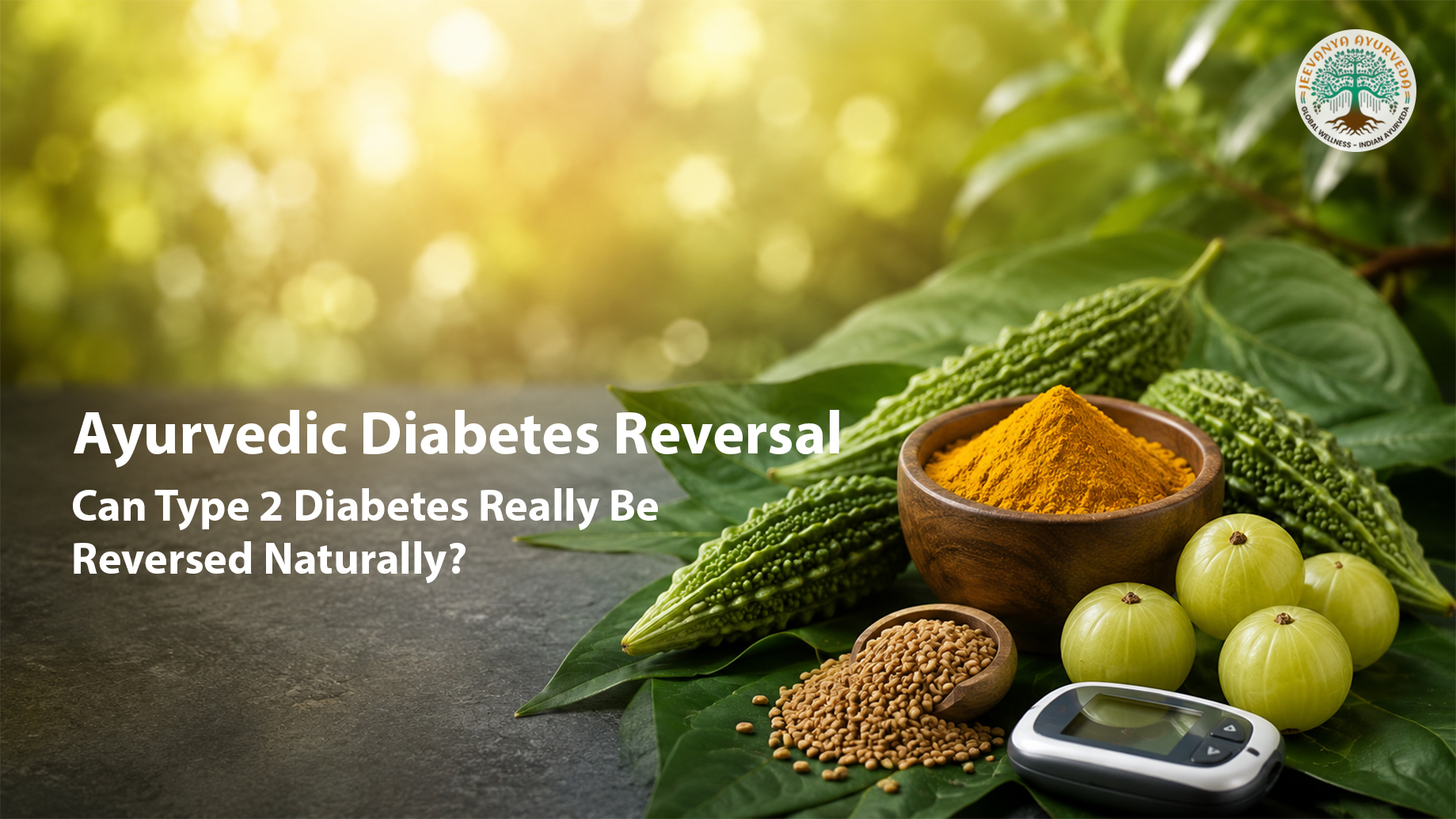
India is now the diabetes capital of the world — and most patients are handed a prescription with a quiet message attached: you’ll need this for life. But that narrative is changing. Thousands of people with Type 2 diabetes are achieving full remission — normal blood sugar, no medication — through a structured combination of classical Ayurveda, evidence-backed herbs, therapeutic detox, and targeted lifestyle change. This guide breaks down exactly how Ayurvedic diabetes reversal works, who it’s right for, what the science says, and what a real program looks like — so you can make an informed decision about your health.
What Does “Diabetes Reversal” Actually Mean?
Most people are told diabetes is a lifelong sentence. But modern medicine has updated that view. Diabetes reversal — or remission — means sustained normal blood sugar levels (HbA1c below 6.5%) without diabetes medication, for at least three months.
The DiRECT Trial (Newcastle University / University of Glasgow, published in The Lancet) found that nearly 50% of Type 2 diabetic patients achieved full remission through intensive weight and lifestyle intervention alone — with no diabetes drugs. Source: Lean et al., The Lancet, 2018 — DiRECT Trial
Ayurveda recognized this long before modern trials. In classical texts, Type 2 diabetes is described as Madhumeha — a metabolic disorder rooted in poor digestion, excess fat tissue (Meda Dhatu), and imbalanced Kapha dosha. The Ayurvedic goal has always been root-cause correction, not symptom suppression.
Why Type 2 Diabetes Is Reversible (The Science)
Type 2 diabetes develops primarily due to insulin resistance — your cells stop responding to insulin, so blood sugar stays high. The root cause? Excess fat deposited inside the liver and pancreas, impairing their normal function.
Key Finding: Prof. Roy Taylor (Newcastle University) demonstrated that removing even 1 gram of fat from the pancreas through weight loss can restore normal insulin secretion and reverse diabetes.Source: Taylor R., “Pathogenesis of Type 2 Diabetes,” Diabetologia, 2013
This is precisely where Ayurvedic therapy aligns with modern science — both target visceral fat removal and metabolic restoration, not just blood sugar numbers.
The Ayurvedic Approach to Diabetes Reversal
A structured Ayurvedic diabetes treatment and reversal program combines four pillars: detoxification, herbal therapy, diet, and movement. Here’s how each works:
- Panchakarma Detox (Shodhana Chikitsa)Therapeutic procedures like Virechana (purgation) and Basti (medicated enema) flush metabolic toxins (Ama) and excess fat from deep tissues, directly improving insulin sensitivity and liver function.
- Evidence-Based Herbal Fortification Key herbs are chosen for their clinically documented glucose-lowering and anti-inflammatory effects — not guesswork.
- Prameha (Anti-Diabetic) Diet A low-glycemic, high-fiber diet rich in bitter gourd, barley, and millets reduces postprandial glucose spikes and supports visceral fat loss.
- Yoga & Functional Movement Targeted asanas (Mandukasana, Dhanurasana) stimulate the pancreas, while daily walking and resistance exercise increase glucose uptake by muscles.
Ayurvedic Herbs That Science Backs for Diabetes
These aren’t folklore — each herb below has published clinical research supporting its role in blood sugar management:
- Methi (Fenugreek): Rich in soluble fibre (galactomannan) that slows glucose absorption. A 2015 study in the International Journal for Vitamin & Nutrition Research showed significant HbA1c reduction with daily supplementation.
- Jamun (Java Plum): Seeds contain jamboline, which inhibits the conversion of starch to sugar. WHO’s traditional medicine database lists it as a validated anti-diabetic botanical.
- Amla (Indian Gooseberry): The richest plant source of Vitamin C — a 2011 study in the European Journal of Clinical Nutrition found it reduced fasting blood glucose comparably to metformin in early-stage patients.
- Gurmar (Gymnema sylvestre): Its active compound gymnemic acid blocks sugar absorption in the gut and may regenerate pancreatic beta cells. Reviewed in Journal of Clinical Biochemistry & Nutrition, 2007.
- Karela (Bitter Melon): Contains polypeptide-p (plant insulin) and charantin, which lower blood glucose. Cited by the American Diabetes Association as one of the most researched anti-diabetic plants.Turmeric (Curcumin): A 2012 RCT in Diabetes Care found curcumin supplementation prevented pre-diabetic patients from progressing to Type 2 diabetes — with a 100% prevention rate vs 16% in placebo group.
Who Can Benefit from Ayurvedic Diabetes Reversal?
Best Candidates for Reversal
The strongest outcomes are seen in patients with: Type 2 diabetes diagnosed within the last 6 years, HbA1c under 10%, who still have residual insulin-producing capacity (tested via C-peptide levels), and who are committed to lifestyle change. Early-stage patients, and those with pre-diabetes, have the highest success rates.
It’s important to be clear: Type 1 diabetes (autoimmune) cannot be reversed with Ayurveda or any other system. For advanced Type 2 with long-standing complications, Ayurvedic therapy plays a powerful supportive and preventive role — reducing drug dependency, slowing complication progression, and improving quality of life.
IDF Data Point: India has the world’s second-largest diabetic population. The International Diabetes Federation projects this will rise to 124 million by 2045 unless lifestyle interventions are widely adopted.Source: IDF Diabetes Atlas, 10th Edition, 2021
What a Structured Program Looks Like (Week by Week)
A well-designed Ayurvedic reversal program isn’t a quick fix. Expect a 3–6 month commitment. A typical structured approach flows as follows:
- W1: Comprehensive DiagnosticsHbA1c, fasting glucose, C-peptide, lipid profile, liver function, and Ayurvedic Prakriti (constitution) assessment to build a personalised plan.
- W2: Deepana Pachana (Digestive Priming)Herbal preparations correct digestive fire (Agni) and prepare the body for deeper detox — clearing the path for Panchakarma.
- W3–4: Panchakarma Detoxification Virechana and Basti therapies mobilise visceral fat and reduce systemic inflammation — the single most impactful intervention for insulin resistance.
- M2–6: Rasayana & Lifestyle Maintenance Ongoing herbal supplementation, supervised diet, yoga, monthly check-ins, and progressive reduction of allopathic medications under medical supervision.
Frequently Asked Questions
Q: Can I stop my diabetes medication immediately after starting Ayurvedic treatment?
No — never stop medications abruptly. A qualified Ayurvedic physician and your diabetologist should collaboratively taper medications based on your improving blood sugar readings. This is a gradual, supervised process.
Q: How long before I see results in my blood sugar levels?
Many patients see measurable improvement in fasting glucose within 4–8 weeks of a structured program. HbA1c (3-month average) typically shows significant reduction at the first follow-up test. Full remission is usually assessed at 3–6 months.
Q: Is Ayurvedic diabetes treatment safe alongside allopathic medicines?
When supervised by qualified practitioners, yes. Integrative care — combining both systems — is increasingly practiced and studied. Always disclose all treatments to both your Ayurvedic doctor and your GP to avoid herb-drug interactions.
Q: What diet should I follow during an Ayurvedic diabetes reversal program?
Focus on low-glycemic grains (barley, foxtail millet), bitter vegetables (bitter gourd, drumstick leaves), legumes, and healthy fats. Eliminate refined sugar, white rice, Maida, and processed foods. Meal timing and portion control are equally critical.