
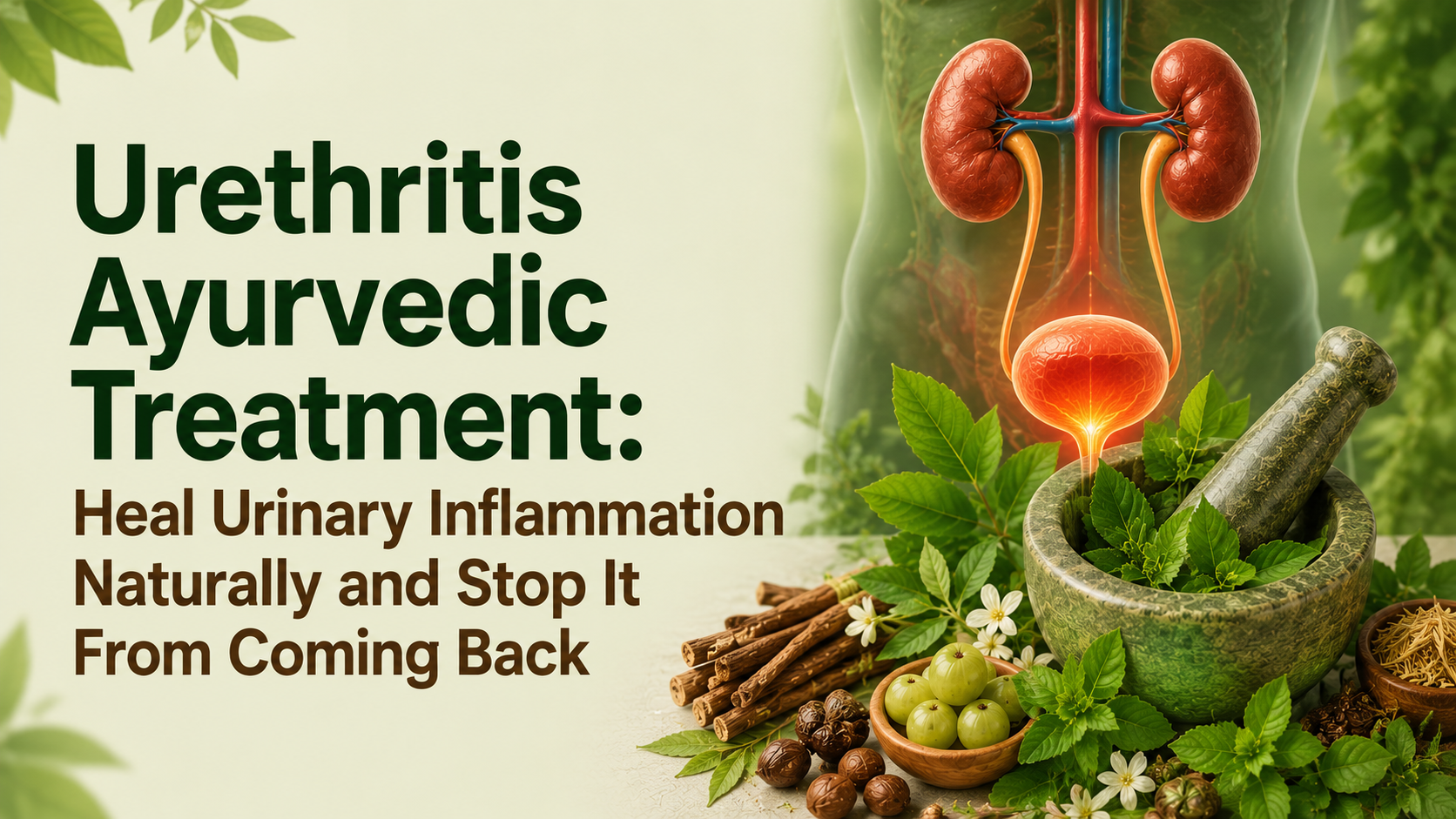
That burning sensation when you urinate. The constant urge — even when your bladder is empty. The discomfort that stays with you long after the washroom. If this sounds familiar, you may be experiencing urethritis — and you are far from alone.
Urethritis is one of the most common urinary conditions in India. Yet most patients spend months — sometimes years — cycling through repeated courses of antibiotics, getting temporary relief, and then watching the symptoms return. Often worse than before.
The reason it keeps coming back is simple. Antibiotics kill the bacteria causing the infection. But they do nothing to correct the internal environment that made your urinary tract vulnerable to that infection in the first place. The fire is put out. The fuel is left untouched.
Urethritis ayurvedic treatment works differently. At Jeevanya Ayurveda in Greater Noida, our certified Ayurvedic doctors treat urethritis by healing the root cause — clearing the inflammation, restoring urinary tract immunity, and rebuilding the internal balance that prevents infection from recurring.
This is the complete guide to understanding and permanently healing urethritis through Ayurveda.
What Is Urethritis? A Clear Explanation
The urethra is a tube that carries urine from the bladder out of the body. In men, it also carries semen. Urethritis is the inflammation of this tube — usually caused by bacterial infection, but sometimes by non-infectious triggers like chemical irritants, prolonged catheter use, or autoimmune reactions.
Types of Urethritis
- Gonococcal Urethritis (GU): Caused by the bacteria Neisseria gonorrhoeae. Also called gonorrhoea. Characterised by thick yellow or green discharge, painful urination, and swelling.
- Non-Gonococcal Urethritis (NGU): The most common type. Caused by bacteria like Chlamydia trachomatis, Mycoplasma genitalium, E. coli, or Ureaplasma urealyticum. Symptoms are similar but often milder — burning urination, clear or cloudy discharge, and urinary frequency.
- Non-Infectious Urethritis: Caused by chemical irritants (soaps, spermicides), physical trauma, or urinary catheter use. No bacteria involved — but inflammation is real and painful.
- Chronic Urethritis: When symptoms persist for more than 6 weeks despite antibiotic treatment, urethritis is classified as chronic. This is the most frustrating presentation — and the one where Ayurveda’s root-cause approach delivers outcomes conventional medicine cannot.
Recognising Urethritis: Signs and Symptoms
Symptoms vary between men and women. Knowing what to look for helps you seek treatment at the right time — before mild urethritis becomes chronic.
In Men
- Burning or pain during urination
- Frequent urge to urinate
- Yellow, green, or clear discharge from the penis
- Itching or discomfort at the tip of the penis
- Blood in urine or semen
- Pain during ejaculation
- Difficulty starting urination
In Women
- Burning sensation during urination
- Frequent urination
- Vaginal discharge — unusual colour or odour
- Pelvic discomfort
- Pain during sexual intercourse
- Mild fever in some cases
Important: Many cases of urethritis — particularly NGU in women — produce no symptoms at all. This is called asymptomatic urethritis. It is still infectious and still causes progressive damage to the urinary and reproductive tract if left untreated.
Why Does Urethritis Keep Coming Back?
This is the question most patients never get a satisfying answer to.
You complete the antibiotic course. The burning resolves. Three weeks later — or three months later — it is back. You return to the doctor. Another antibiotic. Another temporary resolution. Another recurrence.
Here is what is actually happening:
- Antibiotic resistance: Repeated antibiotic use kills the sensitive bacteria — but leaves resistant strains alive. Each course selects for more resistant bacteria. Over time, the infections become harder and harder to eliminate.
- Gut and urinary microbiome destruction: Antibiotics do not selectively kill the bacteria causing urethritis. They kill the beneficial bacteria in your gut and urinary tract too — the ones whose job is to prevent pathogenic bacteria from colonising the urethra. Every antibiotic course leaves the urinary tract more vulnerable to the next infection.
- The internal environment is unchanged: The reason pathogenic bacteria could colonise your urethra in the first place — reduced local immunity, chronic Pitta aggravation, Ama accumulation in the urinary channels — is never addressed by antibiotic treatment. The environment stays the same. The infection comes back.
This is precisely the gap that urethritis ayurvedic treatment fills — and why patients who come to Jeevanya Ayurveda after years of recurring urethritis consistently achieve long-term resolution that antibiotic cycles never produced.
How Ayurveda Understands Urethritis
EasyAyurveda’s page — currently ranking on the first page for this keyword — provides a useful classical overview of urethritis in Ayurveda. But it stays largely academic. Here, we go further — explaining the mechanism in a way that is both clinically accurate and practically useful for treatment.
Mutrakrichra: Ayurveda’s Primary Classification
In classical Ayurvedic texts, urethritis most closely corresponds to Mutrakrichra — literally “difficulty and pain in urination.” The classical texts describe eight types of Mutrakrichra based on the dosha involved:
- Vataja Mutrakrichra: Severe pain in the groin, urinary bladder, and urethra. Urination in small, infrequent quantities with significant pain. Corresponds to urethral spasm and neurogenic urethritis.
- Pittaja Mutrakrichra: Burning sensation during urination. Yellow, orange, or blood-tinged urine. Corresponds to the inflammatory bacterial urethritis presentations most common in modern practice.
- Kaphaja Mutrakrichra: Heaviness and swelling. Sticky, mucoid urethral discharge. Corresponds to NGU presentations with discharge and urethral congestion.
- Sannipataja Mutrakrichra: All three doshas vitiated simultaneously. Mixed symptoms. The most complex presentation — and the most commonly seen in chronic, recurring urethritis.
The Root Cause: Pitta Aggravation and Ama Accumulation
Beyond the symptom classification, Ayurveda identifies two root processes driving urethritis:
Pitta Aggravation in Mutravaha Srotas: Pitta dosha — which governs all heat, inflammation, and metabolic transformation in the body — becomes chronically aggravated in the urinary channels through excessive spicy and acidic food, alcohol, sexual excess, long-term antibiotic use, dehydration, and psychological stress. This aggravated Pitta creates the persistent inflammatory state in the urethral mucosa that allows pathogenic bacteria to colonise and persist — explaining why urethritis keeps recurring even after antibiotics.
Ama in Mutravaha Srotas: Impaired Agni (digestive fire) leads to the accumulation of Ama (toxic undigested metabolic residue) in the urinary channels. Ama blocks the micro-channels of the urethra, feeds pathogenic bacteria, impairs the local mucosal immunity of the urethral lining, and perpetuates the inflammatory cycle. Until Ama is cleared from the Mutravaha Srotas, urethritis will recur — regardless of which antibiotic is prescribed.
This dual mechanism — Pitta aggravation creating the inflammatory environment and Ama accumulation maintaining it — is the complete Ayurvedic explanation for chronic, recurring urethritis. It is also the blueprint for effective treatment.
Urethritis Ayurvedic Treatment at Jeevanya Ayurveda: Our Complete Protocol
At Jeevanya Ayurveda, every urethritis patient receives a personalised treatment plan built on a thorough initial assessment.
Step 1: Comprehensive Assessment
Our senior Ayurvedic physician conducts:
- Nadi Pariksha (pulse diagnosis) — identifying the specific dosha pattern (Vataja, Pittaja, Kaphaja, or Sannipataja)
- Prakriti assessment — understanding the patient’s individual constitution
- Case history — diet, lifestyle, sexual history, antibiotic history, duration of symptoms
- Lab review — urine culture, urethral swab reports, STI panel where relevant
- Symptom pattern analysis — identifying the primary dosha involvement for targeted treatment
This assessment determines the precise treatment protocol. A Pittaja urethritis patient receives a fundamentally different protocol from a Kaphaja or Sannipataja presentation — something no standard antibiotic course accounts for.
Pillar 1: Panchakarma Therapies
Virechana (Therapeutic Purgation)
Virechana is the most important Panchakarma therapy for urethritis. It is Ayurveda’s primary procedure for eliminating excess Pitta from the body. A precisely administered medicated purgation:
- Clears excess Pitta from the liver, small intestine, and bloodstream
- Removes accumulated Ama from the Mutravaha Srotas
- Resets the body’s inflammatory state — reducing urethral hypersensitivity
- Restores Agni — preventing further Ama formation
Most patients experience a significant reduction in burning urination and discharge within 1–2 weeks of completing Virechana. For pitta-dominant and chronic urethritis presentations, Virechana is the single most effective intervention available in classical Ayurveda.
Basti (Medicated Enema Therapy)
Basti pacifies systemic Vata — addressing the pain, spasm, and frequency components of urethritis — while simultaneously clearing Ama from the body’s deeper channels. For Vata-dominant urethritis with severe pain and urinary spasm, a course of Erandamuladi Ksheera Basti or Dashamula Ksheera Basti provides rapid, sustained relief.
Uttara Basti (Medicated Urethral Instillation)
This is the most targeted and clinically powerful Panchakarma therapy for urethritis. Uttara Basti involves the careful instillation of sterile medicated oils or decoctions directly into the urethra or vaginal canal under medical supervision.
Why is this so effective? Because it delivers anti-inflammatory, antimicrobial, and tissue-healing compounds directly to the inflamed urethral mucosa — achieving local concentrations that no oral medication can replicate. The medicated oils used in Uttara Basti:
- Directly reduce urethral inflammation and mucosal damage
- Create a protective coating on the urethral lining — preventing bacterial re-adhesion
- Stimulate local mucosal immunity — the long-term protection against recurrence
- Heal urethral strictures that form from recurrent infections
Uttara Basti is particularly effective for chronic urethritis, post-gonococcal urethral scarring, and female urethritis with pelvic involvement. It is a therapy that EasyAyurveda’s page mentions only in passing — and which represents one of the most significant clinical advantages of receiving treatment at a qualified Ayurvedic institution like Jeevanya Ayurveda.
Avagaha Sweda (Sitz Bath)
A therapeutic sitz bath in warm decoctions of Dashamoola (ten-root formulation) provides immediate symptomatic relief. It reduces urethral pain, relaxes the pelvic floor muscles, improves local circulation, and allows the healing herbs to penetrate the external urethral tissue. Prescribed daily for 15–20 minutes during the acute phase of treatment.
Pillar 2: Herbal Medicines for Urethritis
First Line — Targeting Urethral Inflammation Directly
Gokshura (Tribulus terrestris) The most important single herb for urethritis in Ayurveda. Gokshura reduces urethral inflammation, promotes diuresis, clears urinary tract infections, and improves urine flow. It is a specific Mutravaha Srotas herb — meaning it targets the urinary channels with precision. Used in Gokshuradi Guggulu and as Gokshura Churna boiled with milk and ghee — a classical formula specifically cited in texts for Mutrakrichra.
Chandraprabha Vati The most comprehensive classical Ayurvedic formulation for urinary tract disorders. Its 37 ingredients address the full spectrum of urethritis — burning urination, discharge, urinary frequency, pelvic discomfort, and urethral inflammation. Chandraprabha Vati is the most consistently prescribed formulation in our urethritis treatment protocol because it works across all dosha presentations.
Varuna (Crataeva nurvala) A potent anti-infective and anti-inflammatory herb specifically indicated for urinary tract conditions. Varuna bark reduces urethral inflammation, prevents stone formation in the urinary tract (which can co-occur with urethritis), improves urine flow, and clears Ama from the Mutravaha Srotas. Used in Varunadi Kwath — prescribed twice daily throughout the treatment course.
Second Line — Clearing the Root Cause
Guduchi / Giloy (Tinospora cordifolia) A powerful immunomodulator that rebuilds urinary tract mucosal immunity — the long-term protection against recurrent urethritis. Guduchi strengthens the natural defences of the urethral lining, reduces the chronic inflammation that keeps the urethra vulnerable, and improves Agni to clear Ama accumulation. It is the most important herb for preventing recurrence — not just treating the acute episode.
Shatavari (Asparagus racemosus) The premier tonic for the female reproductive and urinary tract. For women with urethritis — particularly those with recurrent infections, post-menopausal urethral atrophy, or urethritis with pelvic inflammatory disease — Shatavari nourishes and rebuilds the urethral and vaginal mucosa, reduces local inflammation, and restores the hormonal balance that maintains urethral tissue health. Used in Shatavari Ghrita — the classical formulation specifically cited in texts for Mutrakrichra.
Punarnava (Boerhavia diffusa) A powerful diuretic, anti-inflammatory, and urinary tract-rejuvenating herb. Punarnava clears Ama from the urinary channels, reduces urethral swelling, improves urine output, and addresses the fluid retention that sometimes accompanies chronic pelvic inflammation. Used in Punarnavasava — a fermented formulation that provides sustained urinary channel-clearing action.
Classical Formulations From Ayurvedic Texts
In addition to the primary formulations above, our doctors prescribe from the full classical repertoire based on individual presentations:
Vastyamayantaka Ghrita — a classical ghee formulation specifically indicated for urinary tract disorders including Mutrakrichra. Combines multiple urinary-specific herbs in a medicated ghee base for deep tissue penetration.
Chandanasava — a classical fermented formulation with sandalwood as the primary herb. Chandana (sandalwood) is deeply cooling, anti-inflammatory, and specifically indicated for burning urination and urethral inflammation. Chandanasava is among the most effective formulations for Pittaja Mutrakrichra — the burning, inflammatory presentation.
Trikantakadi Guggulu — indicated for urethritis with urinary obstruction, urethral discharge, and recurring infections. The Guggulu base provides anti-inflammatory and anti-infective properties, while the Trikantaka (Gokshura) component targets the Mutravaha Srotas specifically.
Dashamoolarishta — a classical Vata-pacifying fermented formulation. Most effective for Vataja Mutrakrichra — the presentation with severe pain, urinary spasm, and difficulty initiating urination. Reduces neurogenic urethral spasm and improves urine flow.
Avipattikara Churna — specifically indicated for Pitta-dominant presentations with burning urination, acidity, and inflammatory symptoms. Clears excess Pitta from the digestive and urinary tracts simultaneously.
Pillar 3: Diet for Urethritis Recovery
Diet is medicine in Ayurveda — particularly for Pitta-driven conditions like urethritis. The right food choices actively reduce urethral inflammation. The wrong ones can trigger a flare within hours.
Foods That Actively Heal Urethritis (Include Daily)
Barley water — the single most powerful dietary intervention for urethritis. Barley is highly diuretic, alkaline, and anti-inflammatory in the Mutravaha Srotas. Drink warm barley water 2–3 times daily throughout treatment.
Coconut water — natural diuretic, alkalising, and cooling. Reduces urethral burning significantly. One glass of fresh coconut water daily.
Coriander seed water — soak 1 tablespoon of coriander seeds in 2 glasses of water overnight. Strain and drink in the morning. A classical Ayurvedic daily cleanser for the urinary channels.
Pomegranate juice — rich in ellagic acid, a potent urinary anti-infective compound. Also deeply Pitta-pacifying.
Moong dal — the most kidney and urinary tract-friendly protein source. Easy to digest, Pitta-cooling, and gentle on inflamed urethral tissue.
Buttermilk (Takra) — warm, spiced buttermilk with cumin and coriander is a classical Ayurvedic urinary tonic that reduces Pitta and rebuilds gut-urinary microbiome balance.
Amla (Indian Gooseberry) — the richest natural source of Vitamin C. Strengthens urinary mucosal immunity and reduces inflammation.
Sandalwood milk — half teaspoon of sandalwood powder in warm milk at bedtime. A powerful classical remedy for urethral burning and inflammation.
Foods That Worsen Urethritis (Avoid Strictly)
Spicy, sour, and pungent foods — directly aggravate Pitta and worsen urethral inflammation. This includes chilli, vinegar, pickles, tamarind, and fermented sour foods.
Alcohol — the single most potent Pitta aggravator and urethral irritant. Even one drink can trigger a significant urethritis flare.
Caffeine — coffee and strong tea irritate the urethral mucosa directly and worsen urinary frequency and burning.
Refined sugar — feeds pathogenic bacteria in the urinary tract and promotes Ama formation.
Red meat and high-protein foods — produce acidic metabolic waste that irritates inflamed urethral tissue.
Cold and refrigerated food — aggravates Vata and impairs Agni, worsening Ama accumulation in the urinary channels.
Processed and packaged foods — contain preservatives and additives that are directly toxic to the urethral mucosa.
Pillar 4: Lifestyle Corrections That Stop Recurrence
Hydration
Drink minimum 2.5–3 litres of warm or room-temperature water daily. Cold water aggravates Vata. Adequate hydration dilutes urine — reducing the concentration of irritants and bacteria in contact with the urethral mucosa.
Urination Habits
Never hold urine. Holding urine allows bacteria to multiply in the bladder and urethra. Urinate promptly when the urge arises. Post-coital urination within 30 minutes is one of the most effective preventive measures for urethritis recurrence.
Personal Hygiene
Clean the genital area with warm water only — avoid harsh soaps, antiseptic washes, or chemical cleansers that disrupt the natural urethral microbiome. Wear breathable cotton undergarments. Avoid tight synthetic clothing that creates heat and moisture around the genitals.
Stress Management
Chronic psychological stress directly aggravates Pitta and suppresses urinary mucosal immunity. Anulom Vilom pranayama (Alternate Nostril Breathing) — practiced for 10 minutes every morning — reduces cortisol, calms the sympathetic nervous system, and has documented anti-inflammatory effects on the urinary tract. Sheetali pranayama (Cooling Breath) is the most effective pranayama specifically for Pitta-dominant conditions like urethritis.
Sexual Health During Treatment
Avoid sexual activity during the acute phase of urethritis treatment. Inform sexual partners if urethritis is sexually transmitted. Practice barrier protection throughout the treatment course and until urine culture confirms complete resolution.
When to See a Doctor Immediately
Urethritis is generally not a medical emergency. However, seek urgent care if you experience:
- High fever (above 101°F / 38.3°C) with chills
- Severe lower abdominal or pelvic pain
- Complete inability to urinate
- Blood in urine that is heavy or persistent
- Symptoms spreading to the testes, epididymis, or prostate in men
- Symptoms of pelvic inflammatory disease in women
These may indicate that urethritis has spread to the bladder (cystitis), kidneys (pyelonephritis), epididymis (epididymitis), or pelvis (PID) — conditions requiring immediate combined Ayurvedic and conventional medical management.
What Makes Jeevanya Ayurveda Different From Generic Urethritis Treatment?
Most urethritis treatment — Ayurvedic or otherwise — follows a one-size-fits-all approach. Take this antibiotic. Take this herb. Drink barley water. Repeat if it comes back.
At Jeevanya Ayurveda, we do things differently:
We identify your dosha pattern first. Vataja, Pittaja, Kaphaja, or Sannipataja urethritis each requires a different treatment approach. A protocol designed for burning Pittaja urethritis will not effectively treat spasmodic Vataja urethritis — and vice versa. Our Nadi Pariksha-based assessment ensures your treatment matches your actual presentation.
We use Uttara Basti. Most Ayurvedic clinics do not offer this therapy. At Jeevanya Ayurveda, Uttara Basti is a core clinical tool for chronic and recurring urethritis — delivering healing compounds directly to the inflamed urethral tissue where no oral medicine can reach with the same concentration.
We address the root cause. Virechana, Chandraprabha Vati, and Guduchi clear the Pitta aggravation and Ama accumulation that are the true cause of recurring urethritis — not just the bacteria that are the proximate cause.
We monitor with lab tests. Urine cultures and urethral swabs at baseline, at 4 weeks, and at 8 weeks track the bacterial resolution objectively. We do not declare success based on symptom relief alone.
We prevent recurrence. Our protocol includes a 3-month post-treatment maintenance phase — continued Guduchi, dietary guidance, and pranayama — specifically designed to rebuild urinary tract immunity so that urethritis does not return.
Real Outcomes at Jeevanya Ayurveda
The outcomes we consistently see in urethritis patients at Jeevanya Ayurveda:
Acute urethritis (first episode, no antibiotic history): Symptom resolution within 2–4 weeks. Urine culture negative at 4 weeks in most cases.
Recurrent urethritis (2–5 previous antibiotic courses): Significant symptom improvement within 3–4 weeks. Sustained resolution without recurrence over 6–12 months in the majority of patients who complete the full protocol.
Chronic urethritis (>6 months duration, multiple antibiotic failures): This is the most complex presentation. Most patients achieve meaningful symptom reduction within 6–8 weeks. Complete resolution typically requires a full 3–6 month treatment course including Uttara Basti, Virechana, and sustained herbal treatment.
Why Choose Jeevanya Ayurveda?
Urethritis ayurvedic treatment at Jeevanya Ayurveda, Greater Noida, is not a herbal substitute for antibiotics. It is a complete, root-cause healing system that corrects the Pitta aggravation and Ama accumulation underlying urethritis, rebuilds urethral mucosal immunity, delivers targeted therapy through Uttara Basti, and prevents recurrence through a sustained post-treatment protocol.
25+ years of clinical experience. Certified B.A.M.S. physicians. Authentic classical formulations. Lab-monitored outcomes. Online consultations available across India.
Urethritis does not have to keep coming back. Let Ayurveda heal the reason it keeps returning.